Mobile Apps
Cloud Application Development Australia: Building Software for Resilience, Scale and Change

Skyen Systems Team · Sep 2, 2026 · 7 min read
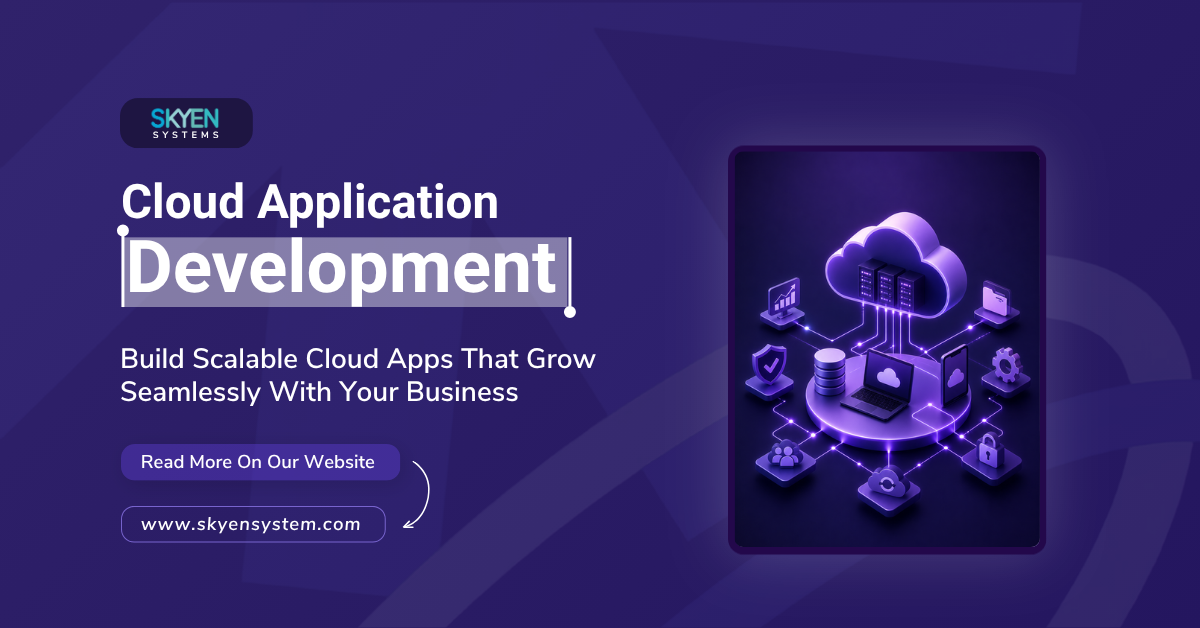
Skyen Systems builds cloud applications for Australian businesses with scalable architecture, managed services, CI/CD, security and observability.
Cloud application development Australia projects should not simply move a traditional server design into a cloud virtual machine and call the work complete. Cloud-native applications are designed around automation, elastic infrastructure, managed services, observability and failure-aware architecture where those choices create real business value.
Skyen Systems develops custom web applications, SaaS platforms and software products. The right cloud architecture depends on workload, security, data, integration and team requirements rather than on copying a generic reference diagram.
Start With Workload Characteristics
Document user volume, traffic peaks, background jobs, file processing, data sensitivity, availability targets and geographic needs. A business portal used by 200 employees has different requirements from a consumer SaaS platform that can grow rapidly after a marketing campaign.
Architecture should be proportionate. Over-engineering a small product creates operational complexity; under-engineering a business-critical system creates fragility.
Use Managed Services Where They Reduce Undifferentiated Work
Managed databases, queues, object storage, identity services and monitoring can reduce the amount of infrastructure a product team must operate. The trade-off is provider dependency and a need to understand service limits, pricing and recovery behaviour.
Skyen Systems’ web design and development services cover SaaS products, portals and custom applications where managed cloud components can support faster delivery when they fit the architecture.
Design for Failure
Cloud infrastructure still fails. Services can time out, zones can become unavailable and dependencies can degrade. Define acceptable recovery time and data loss, then design retries, queues, redundancy, backups and graceful degradation around those targets.
Test what happens when a dependency becomes slow rather than completely unavailable. Partial failure often causes more subtle production problems than a clean outage.
Build Security Into the Architecture
Use least-privilege identities, network segmentation where appropriate, encrypted data in transit and at rest, managed secrets, vulnerability management and protected administrative access. Production environments should not rely on developer laptops or shared credentials for routine operations.
The Australian Signals Directorate’s secure-by-design guidance encourages organisations to make security a core requirement from the earliest design stages.
Use Infrastructure as Code
Infrastructure as code makes environments repeatable and reviewable. Networks, compute, databases and permissions can be version-controlled and changed through peer-reviewed deployment pipelines rather than manual console clicks.
This reduces configuration drift and makes disaster recovery more practical because the environment can be recreated from documented definitions.
Build CI/CD Around Safe Releases
Automated testing and deployment pipelines should make small changes easier to release safely. Use environment promotion, automated quality checks and rollback or roll-forward strategies appropriate to the application.
Separate deployment from feature exposure when useful. Feature flags can reduce release risk, but they also require governance so old flags do not become permanent complexity.
Make Observability Part of the Product
Collect enough telemetry to diagnose problems without turning logs into an uncontrolled copy of customer data. If personal information is involved, the Australian Privacy Principles should inform collection and protection decisions.
Signal | What it helps answer |
Metrics | Is performance or error rate changing? |
Logs | What happened inside a service? |
Traces | Where did a transaction slow or fail? |
Uptime checks | Can users reach critical journeys? |
Business events | Are core actions such as checkout or submission succeeding? |
Plan Data Architecture and Backups
Choose databases according to consistency, query and scale requirements rather than brand popularity. Define backup schedules, retention, restore testing and migration processes. A backup that has never been restored is only an assumption.
Data migration should be rehearsed with representative volume before launch, especially when an existing platform is being replaced.
Treat Cost as an Architectural Signal
Cloud cost can reveal inefficient architecture: over-sized compute, uncontrolled logs, excessive data transfer or services that run continuously without demand. Tag resources, set budgets and review cost by environment and product feature where possible.
Optimise after measuring. Premature cost cutting can create reliability problems, while ignoring cost until scale arrives can damage SaaS margins.
Build the Team’s Operational Capability
Cloud software needs ongoing ownership after release. Decide who responds to incidents, patches dependencies, reviews security alerts, manages costs and improves reliability. Runbooks and clear on-call responsibilities are as important as architecture diagrams.
Skyen Systems offers dedicated software development teams that can include cloud, backend, frontend, mobile and QA capability for products that need continuing delivery and maintenance.
A Practical Cloud Application Roadmap
Discovery: define users, workload, data and availability targets.
Architecture: choose services, security boundaries and integration patterns.
Foundation: create infrastructure as code, environments and CI/CD.
Build: deliver product increments with automated tests and observability.
Validate: load-test, security-test and rehearse failure/recovery.
Launch: deploy gradually where practical and monitor business journeys.
Operate: improve performance, cost, security and reliability from real data.
Choose Architecture for the Product You Are Building
AWS application development, Azure or another cloud can all support strong systems. The platform choice should follow existing capability, workload, compliance, vendor ecosystem and long-term operating model.
Organisations planning a cloud product can contact Skyen Systems with the current stack, integration needs, expected scale and the business outcome the new application must support.
Use Architecture Decision Records
Cloud projects accumulate decisions about databases, queues, identity, deployment and vendor services. Record important choices in short architecture decision records that explain the context, options considered, decision and consequences. This gives future engineers a reason behind the diagram instead of a collection of unexplained components.
Review major decisions when scale or business requirements change. A design that was appropriate for the first 5,000 users may need to evolve, but change should be driven by evidence rather than by technology fashion.
Rehearse Recovery
Schedule restore and recovery exercises instead of assuming backup settings are sufficient. A rehearsal can reveal missing permissions, undocumented dependencies and unrealistic recovery targets before an actual outage forces the team to learn under pressure.
Frequently Asked Questions
What is cloud application development?
It is the design and development of software that uses cloud infrastructure and services for deployment, data, integration, scaling and operations.
What is a cloud-native application?
A cloud-native application is designed to take advantage of cloud operating patterns such as automation, managed services, elastic capacity, observability and resilience rather than simply being hosted in the cloud.
Does every cloud app need microservices?
No. A well-structured modular monolith can be simpler and more reliable for many products. Architecture should match scale, team and domain complexity.
How can cloud applications be secured?
Use strong identity and access control, encryption, secrets management, secure configuration, monitoring, patching and secure-by-design development practices.
Can Skyen Systems build cloud applications in Australia?
Yes. Skyen Systems builds custom web applications, SaaS platforms and software products and supports cloud, backend, frontend and ongoing development capability.